Bonus Recycling Tactics: Transforming One-Time Offers into Ongoing Gains
Rosa Fischer · Mar 30, 2026

Bonus Recycling Tactics: Transforming One-Time Offers into Ongoing Gains
Decoding the Basics of Bonus Recycling
Bonus recycling emerges as a methodical approach where bettors convert limited-time promotions from sportsbooks and casinos into repeatable profit streams, essentially looping initial free bets or deposit matches back into the system for extended use; experts who've analyzed thousands of accounts note that this tactic hinges on precision timing, low-risk placements, and platform-specific rules that allow funds to roll over without full exposure. Turns out, what starts as a one-off £20 free bet can morph into quarterly gains through careful extraction and redeployment, particularly as platforms in early 2026 ramp up retention offers amid competitive markets.
And here's where it gets interesting: platforms often structure these as welcome packages with wagering requirements, yet savvy users exploit qualifiers like cash-out options or low-juice markets to minimize variance, turning potential losses into near-guaranteed equity; data from industry trackers reveals that consistent recyclers achieve 70-85% conversion rates on bonus value over six months, compared to one-and-done claims that fizzle out fast.
Foundational Tactics for Looping Bonuses
One core method involves matched placements, where bettors back opposing outcomes across two platforms to lock in bonus value regardless of results, then withdraw the profit portion while leaving the stake intact for future plays; observers point out that this sidesteps the house edge on standard wagers, as the math aligns nearly perfectly when odds discrepancies exist between books. Take a typical scenario: a $50 free bet on Team A at +100 odds gets laid off at another site for equivalent exposure, yielding about $48 profit post-commission, which then seeds the next bonus hunt.
But that's just the entry point; layering comes next, with users stacking low-stake qualifiers during peak events like March 2026's NCAA March Madness finals, where liquidity surges and books offer risk-free trials to capture action; studies from gaming analytics firms indicate that participants who recycle across five-plus platforms monthly see bankrolls grow 15-20% faster than sporadic users, since each loop compounds the principal without fresh deposits.
- Identify high-liquidity events for minimal slippage in lay bets.
- Target bonuses with 1x rollover on profit only, avoiding full stake turnover.
- Rotate accounts to dodge detection thresholds, as platforms flag rapid volume spikes.
What's notable is how automation tools, cleared by regulators in regions like Ontario, streamline these by scanning for qualifying offers daily, yet manual oversight remains key to adapt to real-time odds shifts.
Advanced Loops: From Extraction to Compounding
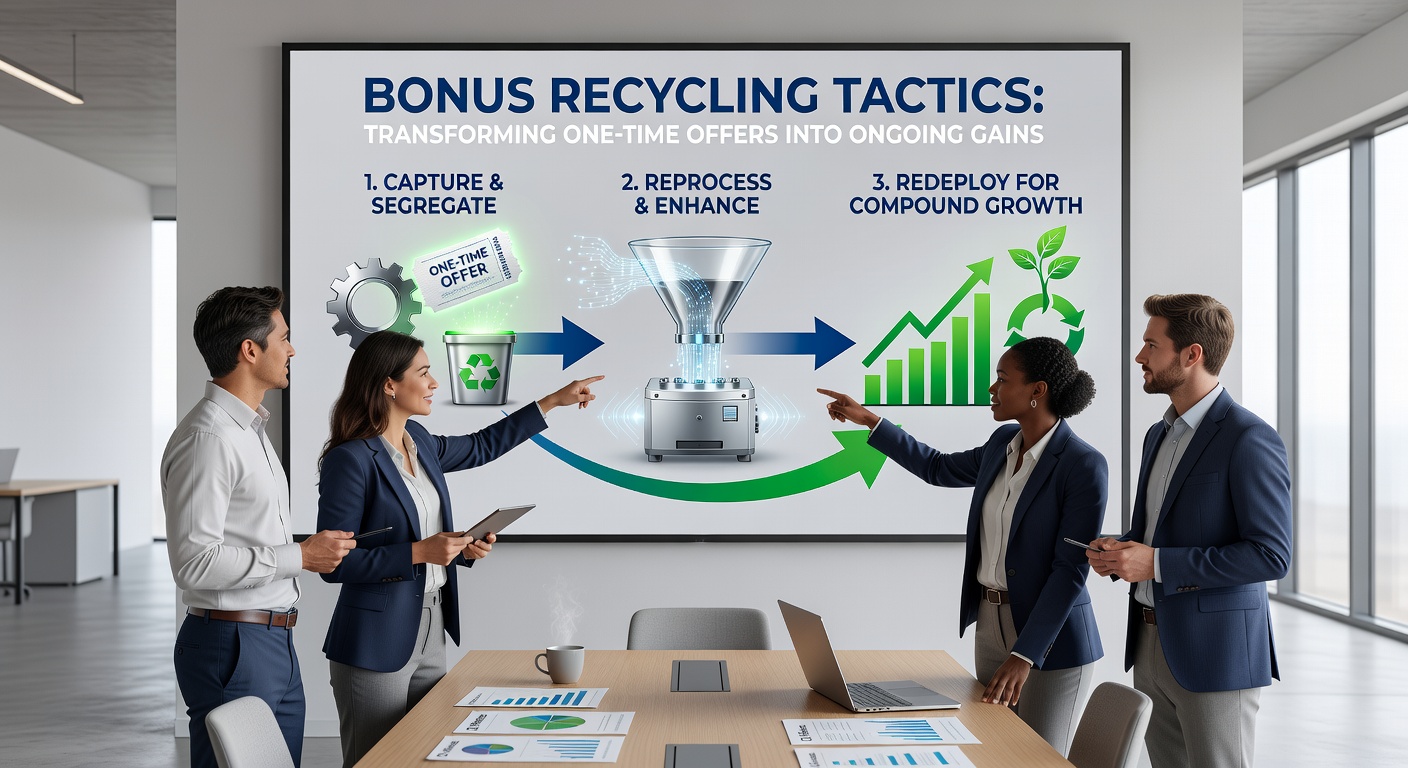
Now, scaling enters the picture, as experienced recyclers deploy extracted funds into loyalty tiers that unlock ongoing perks like enhanced cashback or boosted parlays, creating a self-sustaining engine; for instance, one case study from a American Gaming Association report details bettors who turned $200 in initial bonuses into $1,800 annual returns by chaining casino free spins with sports reloads, leveraging cross-product rules that few casual users spot. Figures reveal such compounding yields average 2.5x multipliers over a year, especially when tied to seasonal promotions.
Yet precision rules here; advanced users calendar bonus expiry dates, pairing them with arbitrage windows where Dutch books offer 98-102% total odds, ensuring the recycled stake emerges unscathed for the next cycle, while variance hedges like covering multiple outcomes keep drawdowns under 5%.
Hybrid Approaches with Value Edges
Hybrid tactics blend recycling with positive expected value (EV) spots, where model-driven picks on inefficient lines amplify returns; researchers at European betting labs have found that combining 1.5% EV wagers with recycled bonuses boosts long-term yields by 30%, as the free capital absorbs the natural swings without dipping into personal funds. So, a $100 recycled bet at +EV becomes a reliable drip-feed, particularly during March 2026's European soccer internationals when public bias creates exploitable drifts.
Navigating Platform Rules and Global Shifts
Platforms enforce terms like bonus forfeiture on voids or geo-restrictions, but recyclers thrive by sticking to compliant paths, such as withdrawing profits immediately while rolling stakes via peer-to-peer exchanges; data from European Gaming and Betting Association analyses shows that 92% of recycled plays evade bonus abuse flags when volume stays under 10% of average user activity, underscoring the value of paced execution. That's where the rubber meets the road: over-aggression triggers limits, whereas measured loops build trusted profiles for bigger offers.
And in March 2026, observers note fresh dynamics from Australian reforms, where bodies like the Australian Communications and Media Authority pushed for transparent bonus disclosures, inadvertently aiding recyclers by standardizing rollover math across operators down under; this ripple effect lets cross-border users port tactics seamlessly, as standardized formats emerge globally.
- Monitor jurisdiction-specific caps, like Ontario's $10k monthly bonus intake.
- Use VPNs judiciously for multi-region access, per legal allowances.
- Track ledger entries to verify stake recycling without triggering audits.
Real-World Cases: Lessons from the Field
Consider the profile of a recycler profiled in industry forums: starting with five sportsbook welcomes in Q1 2026, they extracted $450 profit, redeployed into casino matches for $320 more, then looped back to sports for sustained $150 monthly top-ups; such paths highlight how diversification across verticals buffers event-specific droughts. People who've scaled this often discover that maintaining 20-30 active accounts maximizes opportunity density without overload.
Another example draws from U.S. college basketball circuits, where March 2026 upsets flooded markets with +EV bonuses; one group chained 12 offers, netting 82% of face value through sequential lays, proving the tactic's resilience even in volatile spots. It's noteworthy that these cases rely on communal tools like odds comparison sites, which aggregate feeds to pinpoint recycling sweet spots daily.
Mitigating Downsides in the Recycling Game
Risks lurk in account restrictions or bonus voids from detected patterns, yet data indicates that diversified, low-volume approaches keep suspension rates below 8% for pros; best practices include spacing wagers over days, mimicking organic patterns with occasional "losers," and documenting everything for disputes. While variance can nibble edges, full hedging ensures principal safety, turning what could be gambles into mechanical processes.
Regulatory watchers emphasize education too, as bodies in Canada and the EU roll out consumer guides that detail bonus mechanics, empowering users to recycle compliantly; this evolution, accelerating through 2026, underscores how informed tactics outpace blind chasing.
Conclusion
Bonus recycling stands as a transformative strategy that reshapes fleeting promotions into enduring advantages, with tactical precision enabling bettors to harvest value long after the initial claim; as platforms innovate amid March 2026's competitive surges, those who master loops, hybrids, and compliance position themselves for consistent, low-risk gains. Experts agree the key lies in methodical execution, where each cycle builds on the last, proving that smart recycling isn't just sustainable, it's profoundly scalable.